5 Things You Need to Know Before You Co-Sign a Mortgage!

Sukh Sohal • June 26, 2019

So you're thinking about co-signing for a mortgage? Okay, do you really know what that means do you know what you are getting yourself into? Co-signing isn't necessarily a bad thing, but there is certainly a lot of misinformation floating around on the subject. Although it's nice to be in a position to help someone close to you qualify for a mortgage, It's not a decision that should be made lightly. Co-signing on a mortgage could have a significant impact on your future.

Here are some things you should consider before co-signing a mortgage application.

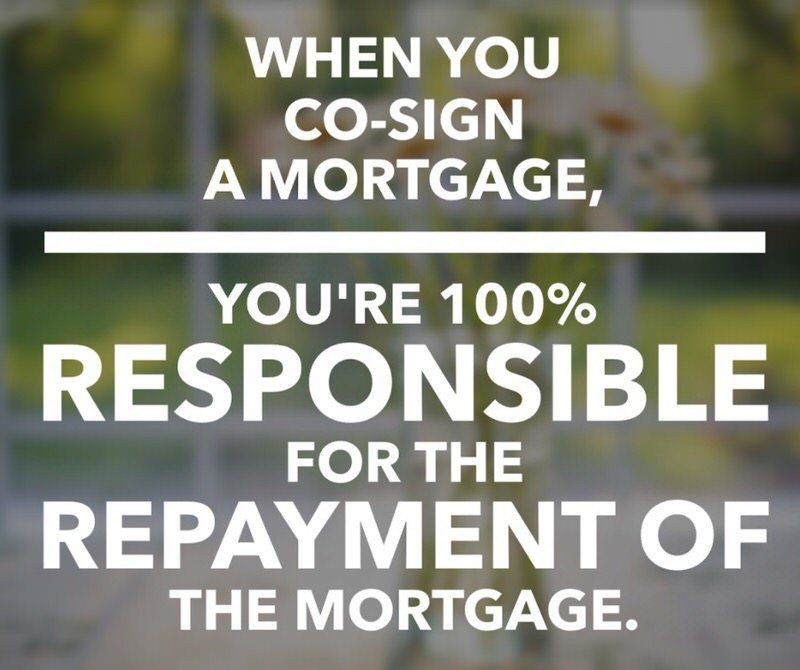
1. Regardless if you're the principal borrower, co-borrower, or co-signor, If you're on the mortgage, you're 100% responsible for the debt of the mortgage and everything that goes along with that. Although the term co-signor makes it sound like you are somehow removed from the actual mortgage, you have all the same legal obligations as everyone else on the mortgage.
2. If the person who you're co-signing for is unable to make the payments for any reason, you will be expected to make them on their behalf. By signing the mortgage documents, you assume full responsibility for the payments (even if it's not you making them).

3. If payments aren't being made, there is a chance the lender will take legal action against you. This includes all available collection methods such as obtaining a judgement in court or garnisheeing your wage or bank accounts. Worse case scenario, they could actually go after your property or assets in order to cover their loses. Now, this is highly unlikely, but not out of the realm of possibility.

4. Once the initial term has been completed, you will not automatically be removed from the mortgage. The person who you co-signed for will have to make a new application for the mortgage in their own name and qualify on their own merit. If they don't qualify at this time, you will be kept on the mortgage for the next term.

5. When you co-sign for a mortgage, all of the debt of the co-signed mortgage is counted against you. This means that if you're looking to buy another property in the future, you will have to include the payments of the co-signed mortgage in your debt service ratios, even though you aren't the one making the payments. This could significantly impact the amount you can borrow in the future.

If you have any questions about co-signing on a mortgage, or about the mortgage application process in general, we'd love to discuss it with you. Please don't hesitate to contact us anytime!

604-862-8080
info@oakandprime.ca
RECENT POSTS 

By Suhk Sohal December 18, 2025
Need to Free Up Some Cash? Your Home Equity Could Help If you've owned your home for a while, chances are it’s gone up in value. That increase—paired with what you’ve already paid down—is called home equity, and it’s one of the biggest financial advantages of owning property. Still, many Canadians don’t realize they can tap into that equity to improve their financial flexibility, fund major expenses, or support life goals—all without selling their home. Let’s break down what home equity is and how you might be able to use it to your advantage. First, What Is Home Equity? Home equity is the difference between what your home is worth and what you still owe on it. Example: If your home is valued at $700,000 and you owe $200,000 on your mortgage, you have $500,000 in equity . That’s real financial power—and depending on your situation, there are a few smart ways to access it. Option 1: Refinance Your Mortgage A traditional mortgage refinance is one of the most common ways to tap into your home’s equity. If you qualify, you can borrow up to 80% of your home’s appraised value , minus what you still owe. Example: Your home is worth $600,000 You owe $350,000 You can refinance up to $480,000 (80% of $600K) That gives you access to $130,000 in equity You’ll pay off your existing mortgage and take the difference as a lump sum, which you can use however you choose—renovations, investments, debt consolidation, or even a well-earned vacation. Even if your mortgage is fully paid off, you can still refinance and borrow against your home’s value. Option 2: Consider a Reverse Mortgage (Ages 55+) If you're 55 or older, a reverse mortgage could be a flexible way to access tax-free cash from your home—without needing to make monthly payments. You keep full ownership of your home, and the loan only becomes repayable when you sell, move out, or pass away. While you won’t be able to borrow as much as a conventional refinance (the exact amount depends on your age and property value), this option offers freedom and peace of mind—especially for retirees who are equity-rich but cash-flow tight. Reverse mortgage rates are typically a bit higher than traditional mortgages, but you won’t need to pass income or credit checks to qualify. Option 3: Open a Home Equity Line of Credit (HELOC) Think of a HELOC as a reusable credit line backed by your home. You get approved for a set amount, and only pay interest on what you actually use. Need $10,000 for a new roof? Use the line. Don’t need anything for six months? No payments required. HELOCs offer flexibility and low interest rates compared to personal loans or credit cards. But they can be harder to qualify for and typically require strong credit, stable income, and a solid debt ratio. Option 4: Get a Second Mortgage Let’s say you’re mid-term on your current mortgage and breaking it would mean hefty penalties. A second mortgage could be a temporary solution. It allows you to borrow a lump sum against your home’s equity, without touching your existing mortgage. Second mortgages usually come with higher interest rates and shorter terms, so they’re best suited for short-term needs like bridging a gap, paying off urgent debt, or funding a one-time project. So, What’s Right for You? There’s no one-size-fits-all solution. The right option depends on your financial goals, your current mortgage, your credit, and how much equity you have available. We’re here to walk you through your choices and help you find a strategy that works best for your situation. Ready to explore your options? Let’s talk about how your home’s equity could be working harder for you. No pressure, no obligation—just solid advice.
By Suhk Sohal December 11, 2025
Ready to Buy Your First Home? Here’s How to Know for Sure Buying your first home is exciting—but it’s also a major financial decision. So how can you tell if you’re truly ready to take that leap into homeownership? Whether you’re confident or still unsure, these four signs are solid indicators that you’re on the right path: 1. You’ve Got Your Down Payment and Closing Costs in Place To purchase a home in Canada, you’ll need at least 5% of the purchase price as a down payment. In addition, plan for around 1.5% to 2% of the home’s value to cover closing costs like legal fees, insurance, and adjustments. If you’ve managed to save this on your own, that’s a great sign of financial discipline. If you're receiving help from a family member through a gifted down payment , that works too—as long as the paperwork is in order. Either way, having these funds ready shows you’re prepared for the upfront costs of homeownership. 2. Your Credit Profile Tells a Good Story Lenders want to know how you manage debt. Before they approve you for a mortgage, they’ll review your credit history. What they typically like to see: At least two active credit accounts (trade lines) , like a credit card or loan Each with a minimum limit of $2,000 Open and active for at least 2 years Even if your credit isn’t perfect, don’t panic. There may still be options, such as using a co-signer or working on a credit improvement plan with a mortgage expert. 3. Your Income Can Support Homeownership—Comfortably A steady income is essential, but not all income is treated equally. If you’re full-time and past probation , you’re in a strong position. If you’re self-employed, on contract, or rely on variable income like tips or commissions, you’ll generally need a two-year history to qualify. A general rule: housing costs (mortgage, taxes, utilities) should stay under 35% of your gross monthly income . That leaves plenty of room for other living expenses, savings, and—yes—some fun too. 4. You’ve Talked to a Mortgage Professional Let’s be real—there’s a lot of info out there about buying a home. Google searches and TikToks can only take you so far. If you're serious about buying, speaking with a mortgage professional is the most effective next step. Why? Because you'll: Get pre-approved (and know what price range you're working with) Understand your loan options and the qualification process Build a game plan that suits your timeline and financial goals The Bottom Line: Being “ready” to buy a home isn’t just about how much you want it—it’s about being financially prepared, credit-ready, and backed by expert advice. If you’re thinking about homeownership, let’s chat. I’d love to help you understand your options, crunch the numbers, and build a plan that gets you confidently across the finish line—keys in hand.